


Ask most Montanans when the power is most likely to go out and they’ll say a blizzard or a deep freeze. Last December proved otherwise. The biggest outage in Flathead Electric Cooperative’s history didn’t come with a blizzard. It came during a warm, wet week, when the ground was soft, the trees were loose and the wind hit close to 100 mph.
With wind season here again, we went back through what the utilities themselves reported about December 17, 2025. Here’s what happened, why restoration took a week in some places, and what it means for your home this winter.
A perfect storm with no snow in it
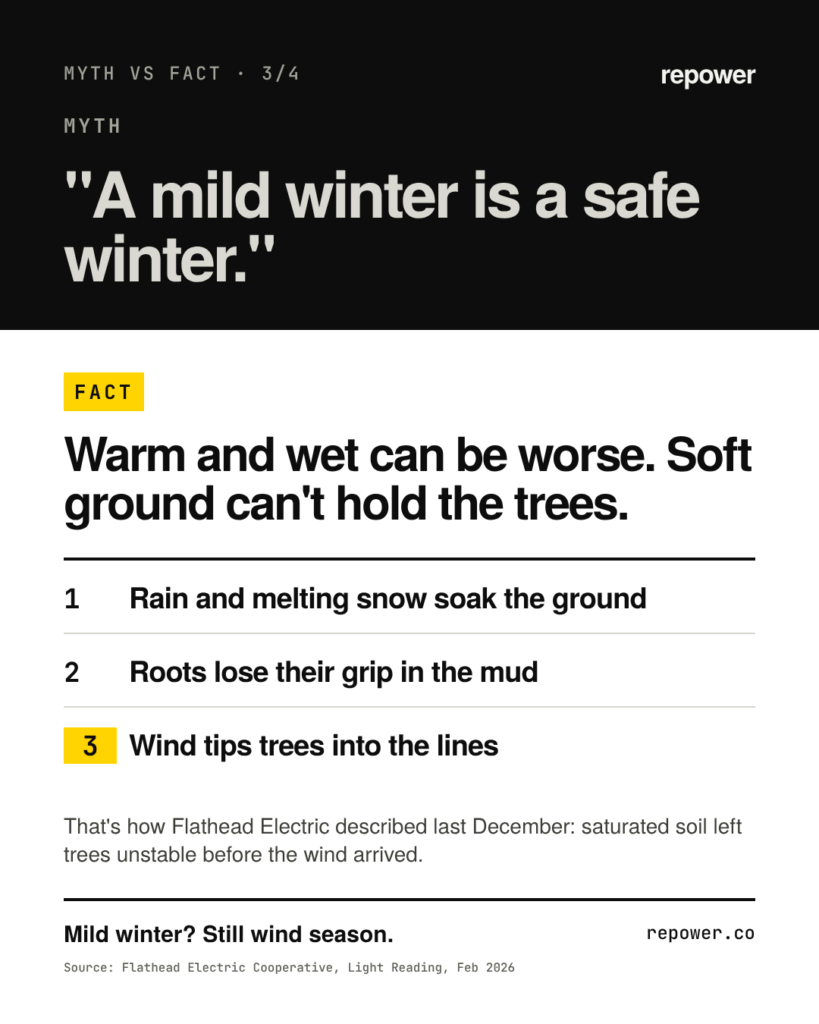
In its February 2026 member newsletter, Flathead Electric Cooperative explained the setup. Unseasonably warm temperatures and heavy rain melted the snowpack and thawed frozen ground. Saturated soil left trees standing in mud with nothing holding their roots. Then the wind arrived.
- Rain and melting snow soak the ground.
- Roots lose their grip in the mud.
- Wind tips trees into the lines.
The National Weather Service saw it coming. “Soils were saturated, and our concern was trees blowing over,” NWS meteorologist Brian Conlan told Montana Public Radio the day the storm hit.
How hard the wind blew
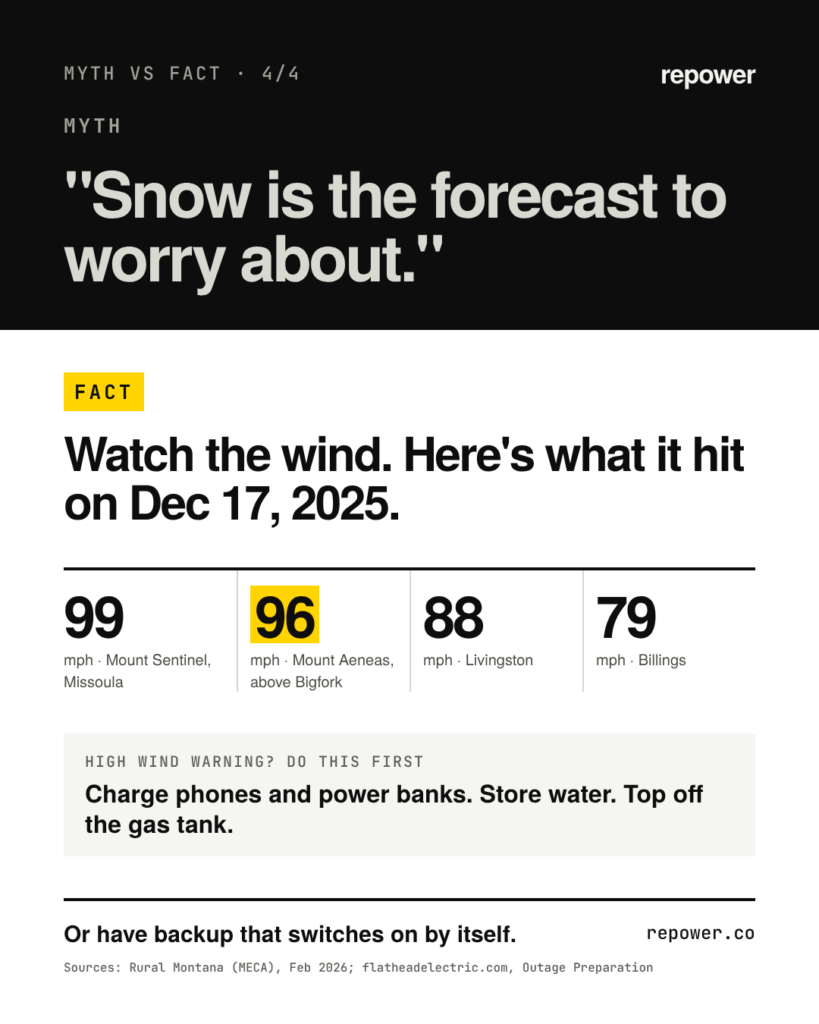
Gusts reported on December 17, 2025, according to Rural Montana magazine’s statewide timeline and Montana Public Radio:
- 99 mph at Mount Sentinel, Missoula (9 a.m.)
- 96 mph at Mount Aeneas above Bigfork (9 a.m., and again at 3 a.m. on Dec. 19)
- 90 mph at the Highlands Golf Club in Missoula
- 88 mph in Livingston (8:16 a.m.) and near Stevensville in the Bitterroot
- 79 mph in Billings (12:05 p.m.)
Livingston saw 85 mph or more for three days straight: 88 on Dec. 17, 85 on Dec. 18 and 86 on Dec. 19.
Co-op by co-op: peak outages on December 17
Rural Montana, the magazine of the Montana Electric Cooperatives’ Association, published an hour-by-hour timeline of how the state’s co-ops were hit. More than 15 co-ops reported outages on the same day. Here are the reported peaks and when the last members got power back. Co-ops count in either meters or members, so the units differ slightly.
| Co-op | Peak outage, Dec. 17 | Fully restored |
|---|---|---|
| Flathead Electric | Over 30,000 meters (noon) | Dec. 24, 10 a.m. |
| Northern Lights | 15,000 meters (2 p.m.) | Dec. 22, 7 p.m. |
| Missoula Electric | 8,822 members (2 p.m.) | Dec. 24, 3 a.m. |
| Park Electric | 6,879 of 7,029 meters (10:30 a.m.) | Dec. 19, 8:30 p.m. |
| Lincoln Electric | Entire system (1:45 p.m.) | Dec. 20, end of day |
| Ravalli Electric | 4,050 members (noon) | Dec. 20, 6:10 p.m. |
| Yellowstone Valley Electric | 3,500 members (4:30 p.m.) | Dec. 19, 10 a.m. |
| Beartooth Electric | 2,894 (4:48 p.m.) | Dec. 18, 3 p.m. |
| Southeast Electric | 2,239 members (7:30 p.m.) | Dec. 18, 2 p.m. |
| McCone Electric | 1,560 (10 p.m.) | Dec. 18, 10:30 p.m. |
| Big Horn County Electric | 1,390 members (7:30 p.m.) | Dec. 23, 11:45 p.m. |
| Big Flat Electric | 1,287 meters (2 p.m.) | Dec. 19, 9 p.m. |
| Vigilante Electric | 1,109 members (9:30 a.m.) | Dec. 18, 7:22 a.m. |
| NorVal Electric | 866 members (10:36 p.m.) | Dec. 18, 7:15 p.m. |
| Sun River Electric | 800 meters (3 p.m.) | Dec. 18, noon |
Those numbers only cover the co-ops. NorthWestern Energy, which serves most of the cities, reported that more than 35,000 of its Montana customers had an outage on December 17. Its call center took a typical month’s worth of calls in a single day.
Why it took a week, not a day
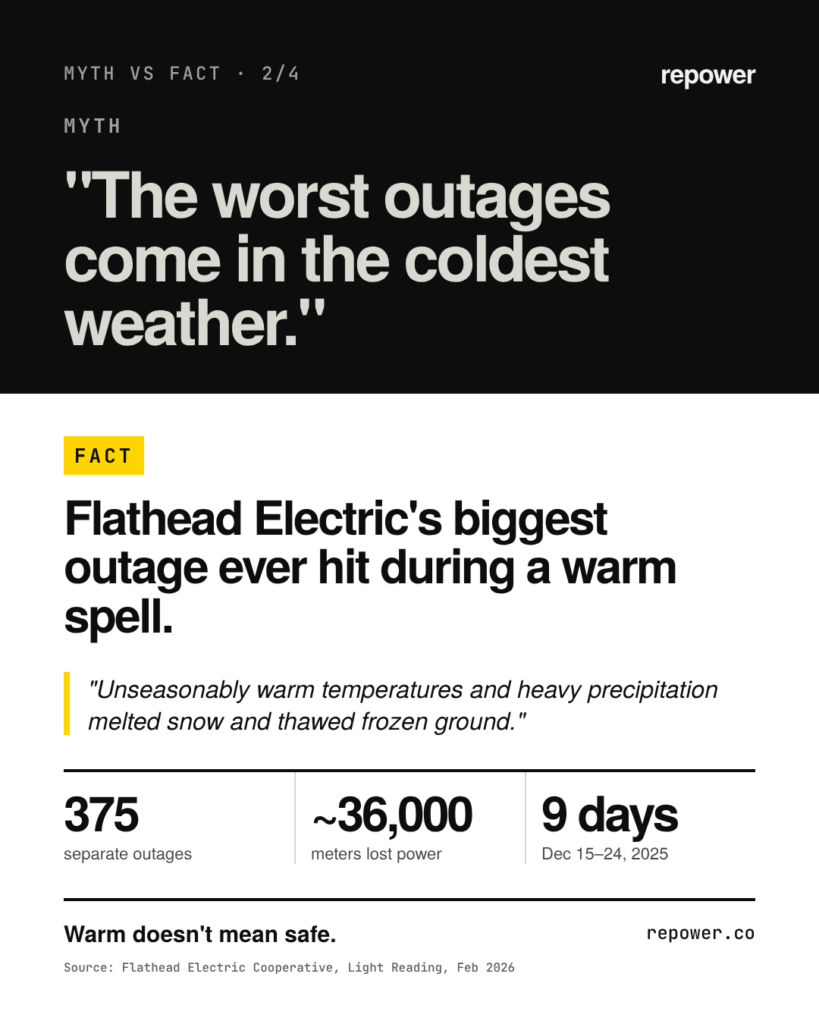
Flathead Electric’s numbers show the scale. Over the December 15–24 event, the co-op responded to nearly 375 separate outages and recorded more than 51,000 outage interruptions. About 36,000 meters, roughly half its 76,000-meter system, lost power at least once, and many members lost it more than once. Crews worked nine nights in a row, sometimes in mud deep enough to swallow heavy equipment. The last members, in Libby, got power back on the morning of December 24.
The bigger problem was that everyone got hit at once. Normally, when one utility is overwhelmed, neighboring utilities send crews to help. Last December, utilities from Washington to the Dakotas were dealing with the same storm, so there was no one free to send.
The lineworkers did remarkable work in dangerous conditions. But when a storm covers the whole region, even the best crews can’t be everywhere first.
This isn’t a Montana fluke
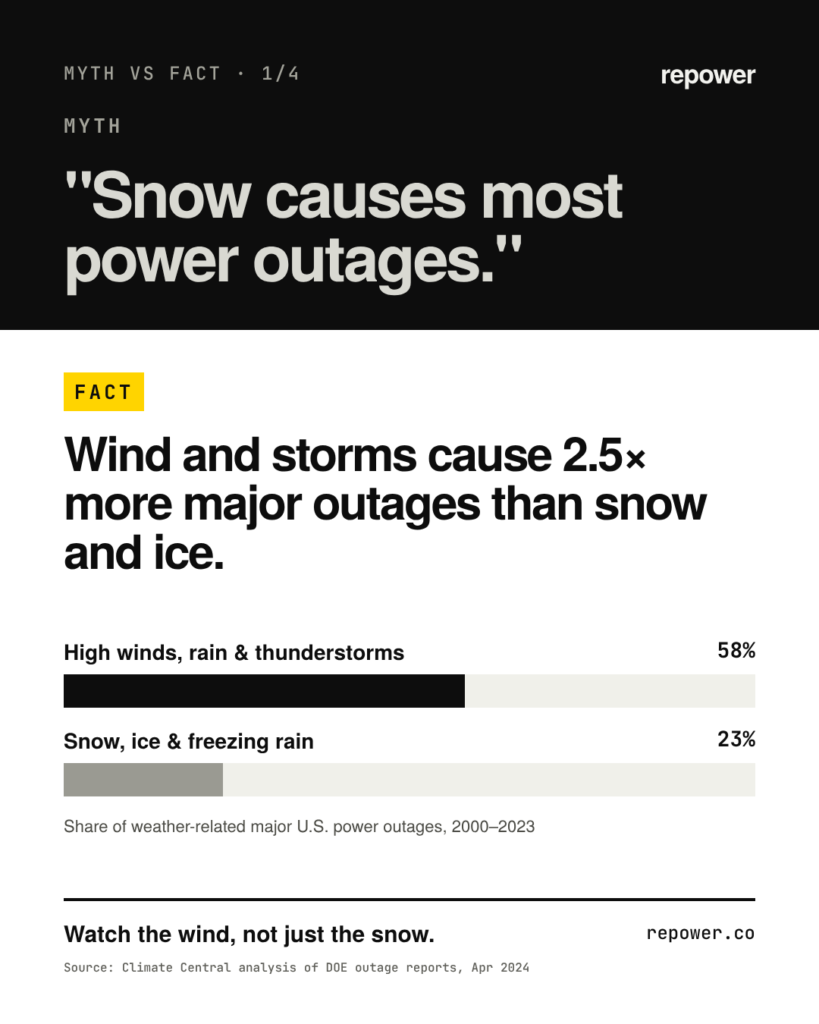
Nationally, wind is the bigger threat. Climate Central analyzed major U.S. power outages from 2000 to 2023. Severe weather such as high winds, rain and thunderstorms caused 58% of weather-related outages. Snow, ice and freezing rain caused 23%. That’s about 2.5 times as many outages from wind and storms as from winter weather.
Montana’s wind season runs all winter. A mild, wet stretch can be the riskiest time of all, because that’s when the ground lets go of the trees.
What an outage really costs a Montana household
An outage isn’t really about kilowatt-hours. It’s about what stops working:
- Water, if you’re on a well
- Heat, since most furnaces need power for the fan and controls
- Internet and phone, including cell service when towers lose power
- The freezer, often with a season’s worth of meat inside
When a High Wind Warning goes out
Whatever your setup, a few simple steps make a big difference:
- Charge phones and power banks.
- Store drinking water, especially if you’re on a well.
- Top off your vehicle’s gas tank.
- Stay well away from downed lines, and assume any line is live.
Backup that switches on by itself
A home battery system like Tesla Powerwall is designed to take over on its own when the grid goes down. You don’t need to fuel up a generator in 90 mph wind, run extension cords or listen to engine noise. What it can run, and for how long, depends on your home’s loads and the system size. That’s why we start every project by building a backup plan around what matters most to you, like the well pump, the furnace and the freezer.
A note on timing: most battery installs take several weeks from signing to a working system, because utility approvals take time. We won’t promise you’ll be backed up before the next storm. What we will do is reserve your install slot and give you an honest date.
Wind season isn’t over. Learn more about battery storage and backup.
Sources
- Rural Montana, Montana Electric Cooperatives’ Association, “Windstorm wreaks havoc on co-ops across the state,” February 2026, pp. 2–3
- Flathead Electric Cooperative, “Hurricane-force winds cause largest, longest power outage in Co-op history,” Light Reading, February 2026 (flatheadelectric.com/december2025outage)
- Montana Public Radio, “Winds whip through Montana, cutting power, blocking roads and toppling trees,” Dec. 17, 2025
- NorthWestern Energy, storm updates, Dec. 17–18, 2025
- Climate Central, “Weather-related power outages rising,” April 2024