


At 12:05 p.m. on December 17, 2025, a 79 mph gust was reported in Billings. By late afternoon, two of the area’s electric co-ops had nearly 6,400 members without power between them.
Yellowstone Valley Electric
- Dec. 17, 2 p.m. First known outage (30 members). Crews dispatched.
- Dec. 17, 4:30 p.m. Peak outage: 3,500 members
- Dec. 18, 11 p.m. 99% of members have power
- Dec. 19, 10 a.m. Final member restored
Beartooth Electric
- Dec. 17, 7:26 a.m. First outage (114 members). Two linemen dispatched a minute later.
- Dec. 17, 4:48 p.m. Peak outage: 2,894
- Dec. 18, 2:45 a.m. Majority of members back in service
- Dec. 18, 3 p.m. All members back in service
Big Horn County Electric, to the southeast, was hit harder and for longer. It peaked at 1,390 members out, and its last member wasn’t restored until 11:45 p.m. on Dec. 23. Winds were still gusting to 60 mph in Pryor on the morning of Dec. 18.
Most homes inside Billings city limits are served by NorthWestern Energy, which reported more than 35,000 Montana customers with outages on Dec. 17.
The risk is wind, not just winter
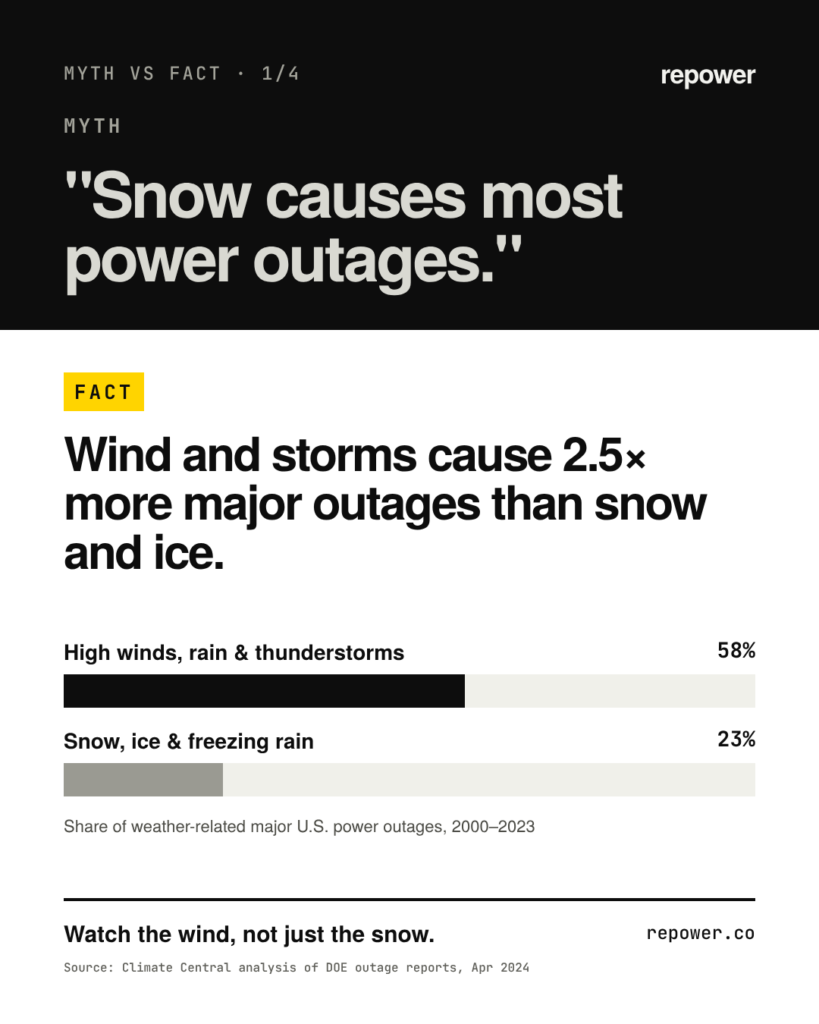
Nationally, high winds, rain and thunderstorms caused 58% of weather-related major power outages from 2000 to 2023, compared with 23% for snow and ice, according to Climate Central. Last December’s statewide storm hit during a warm spell. A forecast without snow doesn’t mean the power will stay on.
Backup that just happens
A home battery system like Tesla Powerwall is designed to take over automatically when the grid goes down, with no generator to start and no cords to run. We’ll build a backup plan around the loads that matter most in your home.
Read the full statewide story in It Wasn’t the Snow. It Was the Wind.
Sources: Rural Montana (MECA), February 2026, pp. 2–3; NorthWestern Energy, Dec. 17, 2025; Climate Central, April 2024.